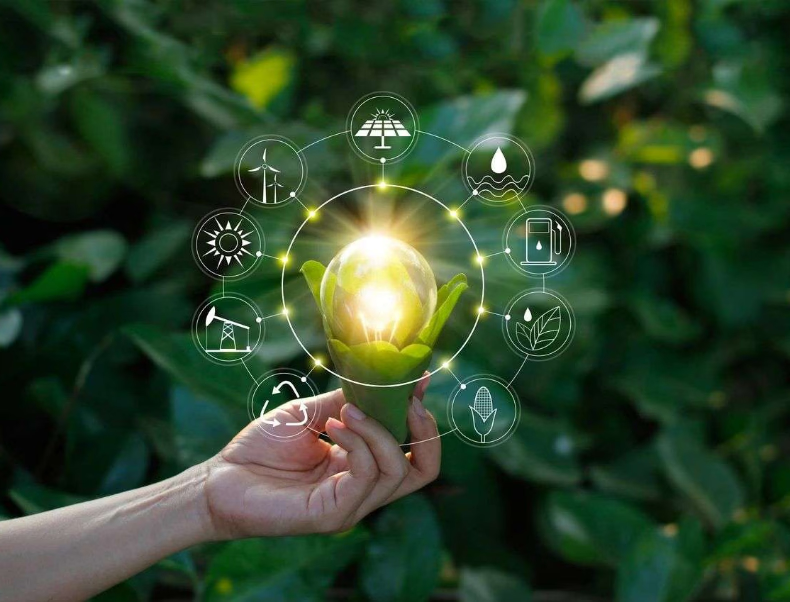
For Consumer Packaged Goods (CPG) brands, sustainability is no longer a nice-to-have but a strategic imperative. Consumers are increasingly prioritizing environmentally and socially responsible practices, and regulatory pressures are mounting, requiring brands to reduce their environmental impact while meeting demand for transparency and ethical sourcing. However, sustainability can be a confusing and resource intensive initiative, with many companies wondering where to start. What are the most impactful areas that CPG brands should focus on for a sustainable future and sustainable business?
Below are the top considerations for brands looking to make sustainability a core element of their strategy:
1. Circular Economy and Waste Reduction
The linear “take-make-dispose” model is outdated and unsustainable. Brands need to rethink product lifecycles, aiming for circularity by designing products that can be reused, repaired, or recycled. One of the most effective ways to do this is by adopting the principles of a circular economy, where products are made to last, and waste is minimized.
- Use packaging made from recycled content or biodegradable materials.
- Design and innovate products that can be reused, repaired, and/or recycled.
- Initiate programs for consumers without access to recycling facilities to return used products or packaging for recycling or reuse.
2. Consider Environmental Regulation
Regulation is becoming more common as governments regulate companies to help reach environmental goals. Consider existing and upcoming regulations your company is subjected to in order to design a sustainability strategy that is effective for your company.
- Research existing policies and requirements to prepare for reporting standards and environmental impact reports.
- Tailor your sustainability plan to align with common frameworks if your company is not required to report yet, as many regulatory parties are using the same frameworks to create policies.
- Evaluate your company’s environmental impact and dependence on resources to better understand how policy will affect your company in the future.
3. Incorporating Shifting Datasets
Collecting accurate supply chain data is one of the largest barriers companies face when evaluating their environmental impact. Data collection and evaluation requires cooperation with suppliers and expertise for a comprehensive understanding of a company or product’s environmental footprint. This process can take time and resources and become outdated quickly with constantly shifting supply chains and operational processes.
- Create clear expectations with suppliers and partners to have updated and reliable data to perform environmental analysis.
- Regularly assess your company’s environmental impact to understand how shifts in the supply chain impact your company’s footprint.
- Consider your company’s dependence on natural resources and how a decreased dependence can increase the resilience of your company.

4. Transparency and Avoiding Greenwashing
Consumers are becoming more environmentally conscious of their personal footprint and are aligning their purchases with their values. However, they are also becoming skeptical of green claims that do not hold credibility and are looking to purchase products that they definitely know have a reduced environmental impact compared to competitors.
- Regularly perform a Life Cycle Assessment to substantiate claims and understand areas for future improvement.
- Consider third party validation from a reputable organization, such as an eco-label, that helps customers easily differentiate your product as sustainable from another product.
- Avoid generalizations and set clear objectives that are measurable so stakeholders have a quantitative understanding of your company’s progress toward a lower environmental impact.
5. Product Innovation
Leverage new technologies to design products that are better for the planet. Investors are seeking companies that are resilient against natural disasters and shifting supply chains and customers are seeking products that have a lower environmental impact. Products that are cutting edge and have a reduced environmental impact attract stakeholders seeking to align their actions with their environmental values.
- Shift product and packaging materials away from high impact materials like plastic to lower impact materials.
- Design products that require less material, packaging, and are high quality for more use per product.
- Work with suppliers and partners to develop innovative solutions that are affordable, scalable, and practical, while having a reduced environmental impact.
The Path Forward for CPG Brands
Driving sustainability in CPG requires a strategic focus on key areas that create long-term success for both businesses and the planet. Prioritizing circular economy practices, staying ahead of environmental regulations, using accurate and transparent data, avoiding greenwashing, and investing in product innovation are essential for industry change. By embedding these considerations into core strategies, brands can not only reduce their environmental footprint but also build trust with consumers, stay competitive in a rapidly evolving market, and remain compliant with regulation.
Next Steps: Reaching CPG Sustainability Goals
CarbonBright’s AI-powered LCA software helps organizations accurately measure emissions and meet regulatory standards—at a fraction of the time and cost of traditional methods.
Contact us to get started!