In an era where our lives are intertwined with an ever-expanding array of products, understanding and mitigating their environmental impacts has become crucial. Enter the Ecodesign for Sustainable Products Regulation (ESPR), a cornerstone initiative that promises to reshape the environmental footprint of products across the European Union (EU). In this blog post, we’ll delve into the What, Why, and How of ESPR, exploring its history, the importance of Life Cycle Assessments (LCAs), and how businesses and consumers can prepare for this transformative regulation.
What is the Ecodesign Directive for Sustainable Products (ESPR)?
The goal of the ESPR is to implement environmentally sustainable products and practices to reduce the negative environmental impact of consumption habits. The ESPR replaces the Ecodesign Directive and extends its impact by including almost all physical products (except for exceptions like food) and reinforces the range of ecodesign requirements for products.
The ESPR builds on the foundation of the 2009 Ecodesign Directive and is part of the broader effort under the 2020 Circular Economy Action Plan, which aims to transition the EU towards a circular economy. The EU claims the ESPR will help them reach their environmental and climate goals, double the circularity rate of material use, and achieve energy efficiency targets by 2030.
Objectives of the ESPR
- Improve circularity, energy performance, recyclability, and durability
- Develop a strong, well-functioning single market for sustainable products
The ESPR also introduces a ban on the destruction of unsold textiles and footwear, addressing the wastefulness of resources in the consumer industry. This bold measure may pave the way for similar bans in other sectors.
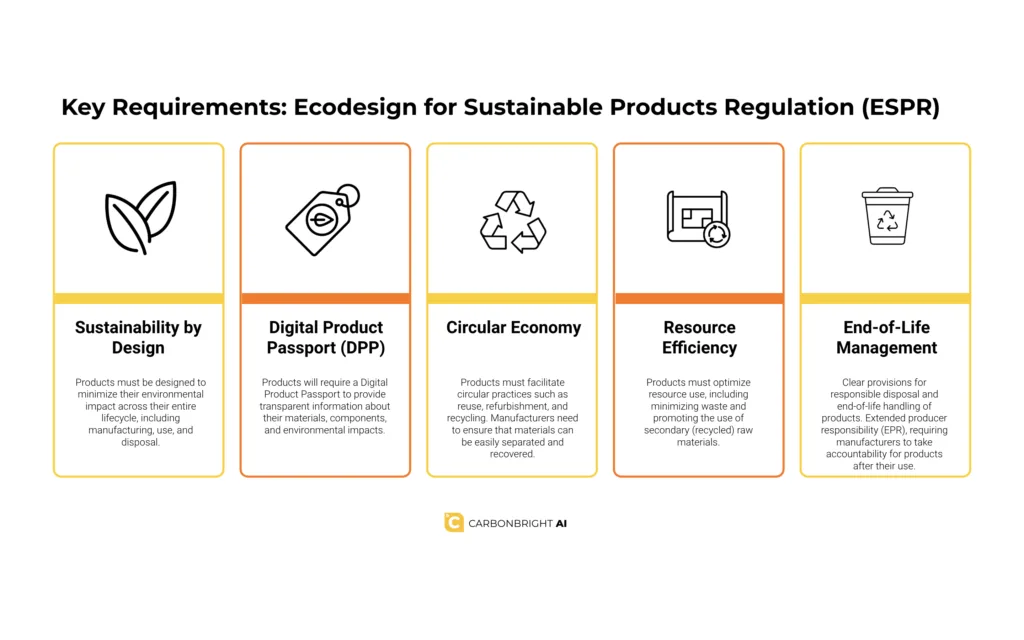
Another significant innovation is the Digital Product Passport, designed to enhance transparency and reduce trade barriers for greener products. This tool aims to lower costs for sustainable investments, marketing, and compliance, thereby increasing accessibility to environmentally friendly products.
Legal Framework and Timeline
The ESPR officially came into effect on July 18, 2024. It provides the framework for setting specific rules aimed at reducing the environmental impact of products. The regulation lays the groundwork for detailed requirements for individual products or groups of products with similar characteristics.
Businesses should expect additional policies and regulations to emerge, addressing product categories over time.
How to Prepare for the ESPR
Everyone, from manufacturers to consumers, plays a role in the success of the ESPR. Businesses, in particular, may face new regulations and policies depending on their location and product type. Here are actionable steps to prepare:
Conduct Environmental Assessments: Use tools like Life Cycle Assessments (LCAs) and Product Carbon Footprints (PCFs) to evaluate your products’ environmental impacts.
Innovate for Sustainability: Leverage new technologies and materials to create environmentally friendly designs.
Strengthen Supply Chains: Collaborate with suppliers to align practices with ESPR requirements.
Stay Updated: Monitor policy changes and updates to ensure compliance.
Adopting these measures not only ensures compliance but positions businesses as leaders in the transition to a greener economy.
What Products are Affected by the ESPR?
The ESPR applies to all products sold on the EU market, regardless of their origin. It focuses on the following aspects to drive sustainability:
- Durability: Designing products to last longer
- Reusability and Reparability: Ensuring products can be repaired or reused
- Upgradability: Encouraging modular designs for easier upgrades
- Energy and Resource Efficiency: Minimizing energy and material use
- Recycled Content: Promoting the use of recycled materials
- Remanufacturing: Supporting refurbishment and resale
- High-Quality Recycling: Ensuring materials are recycled without degrading quality
While the ESPR sets general principles, specific policies for individual products or entire categories will likely follow.
Key Takeaways
The ESPR reflects the EU’s commitment to achieving its climate and environmental goals. By creating a robust policy framework, the ESPR aims to increase accessibility to green products and foster a thriving market for sustainable goods.
For businesses, this regulation represents both a challenge and an opportunity. Preparing for compliance by analyzing products and supply chains can reveal ways to reduce environmental impact, enhance efficiency, and drive innovation. Companies that embrace these changes are more likely to thrive in the evolving market.
Next Steps: Meeting Sustainability Requirements
CarbonBright AI’s LCA solutions help organizations accurately measure emissions and meet regulatory standards—at a fraction of the time and cost of traditional methods.
Contact us to get started!