In an era where the climate crisis is accelerating, businesses must take decisive action to mitigate their environmental impact. For B Corporations (B Corps), this imperative is not only a matter of corporate responsibility but also a critical factor in achieving and maintaining B Corp Certification. The draft standards from B Lab emphasize a rigorous approach to climate action, urging companies to measure their greenhouse gas (GHG) emissions, set science-based targets, and implement comprehensive climate transition plans.
Life Cycle Assessments (LCAs) have emerged as a pivotal tool in this context. LCAs provide a systematic method to evaluate the environmental impacts of a product throughout its entire lifecycle—from raw material extraction through production, use, and disposal. By adopting LCAs, B Corps can gain a holistic understanding of their environmental footprint, identify areas for improvement, and make informed decisions that align with the stringent requirements of the new B Corp standards.
What is a Life Cycle Assessment (LCA)
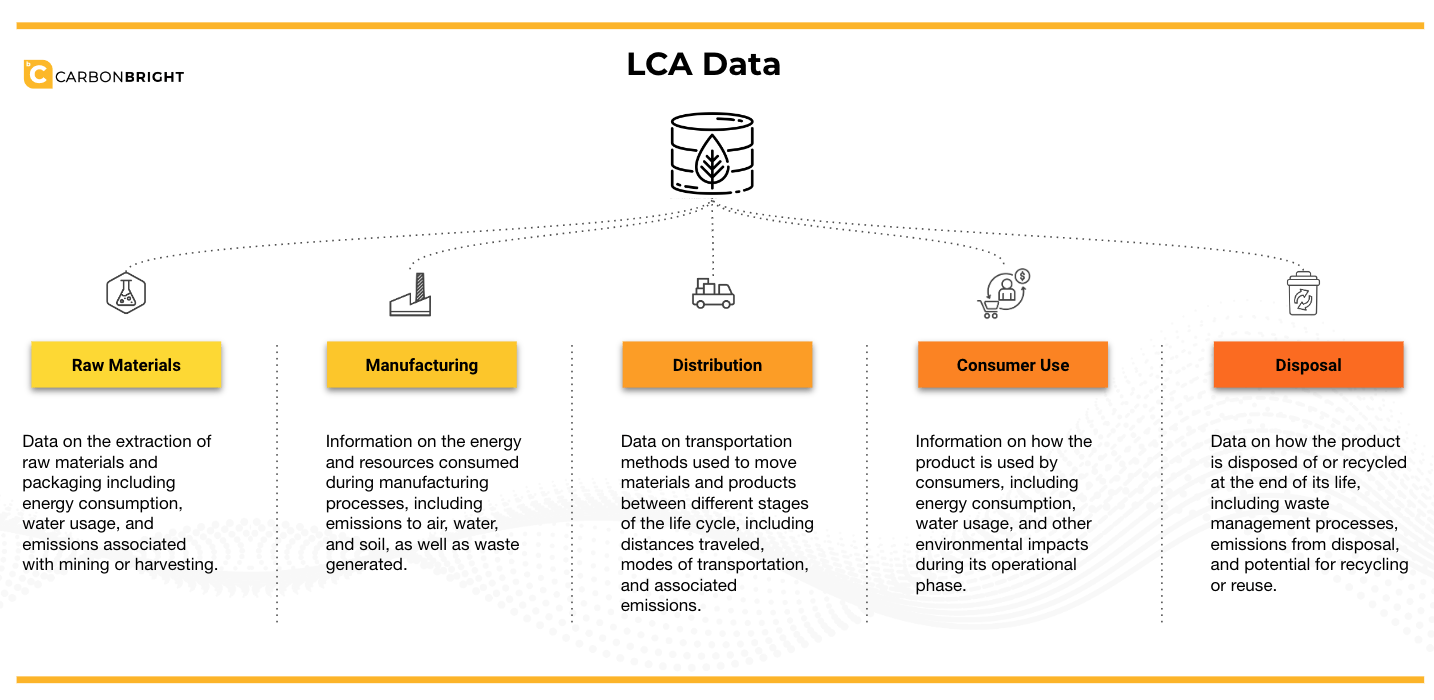
An LCA measures the environmental impact of a product throughout its entire lifecycle. A life cycle is divided into 5 main stages:
- Raw Material Extraction
- Manufacturing & Processing
- Transportation & Distribution
- Consumer Usage & Retail
- End of Life & Disposal
Each stage contributes to the overall environmental impact in varying degrees. Performing an LCA for each product is crucial for understanding these contributions at a product level and a company level to identify opportunities for improvement.
Why Should B Corps Conduct LCAs?
1. Maintaining B Corp Certification
B Corp Certification is built around B Lab’s Impact Assessment, which scores a company across governance, workers, community, environment, and customers. The environment category overlaps directly with what an LCA already measures: energy use, greenhouse gas emissions, materials sourcing, and waste. Companies that have already conducted product-level LCAs are not starting from scratch when it comes time to complete this section of the Impact Assessment — they can pull existing, verifiable figures for energy consumption, emissions by source, and material composition directly into their submission, rather than estimating them under deadline pressure.
This matters because the Impact Assessment rewards credibility, not just intent. A company that reports “we’re reducing our environmental impact” without underlying data is making a claim B Lab has no way to verify. A company that reports emissions per unit produced, backed by an ISO 14040/14044-aligned LCA using recognized datasets like ecoinvent or GaBi, is submitting evidence. As B Lab’s draft standards push toward a more rigorous approach to climate action — requiring companies to measure GHG emissions, set science-based targets, and implement climate transition plans — that gap between claimed and verified impact is exactly what the new requirements are designed to close.
2. Social and Environmental Responsibility
B Corps value sustainability and social responsibility and are held accountable to high standards. Performing an LCA allows for insights into environmental impact which can have social impacts like water and soil pollution, habitat degradation, and worker exploitation that impact the livelihood of ecosystems and communities. Reducing environmental impact can improve social equality and increase quality of life.
3. Accountability and Resiliency
B Corps are still businesses that must balance profit with environmental and social responsibility. Reducing environmental impact at all stages of the lifecycle from opportunities of increased resource, manufacturing, and transportation efficiency can save on costs and increase investor interest with long-term stability.
Furthermore, addressing environmental impacts can increase a company’s resilience to climate change and resource scarcity. Improved resource efficiency and reduced reliance on finite resources can attract investors, better insurance rates, and ensure long-term stability.
4. Transparency and Credibility
Sharing science backed data allows companies to accurately communicate their impact to stakeholders. Comprehensive data can increase stakeholder trust in the brand through accurate results and clear progress towards sustainability goals.
Additionally, LCAs provide scientifically backed data that enhance the credibility of sustainability claims. Leveraging data can increase brand loyalty among consumers who are conscious about the environmental impact of their purchases.
5. Leadership
B Corps are leaders. Leveraging emerging technology fosters innovation and drives a market prioritizing sustainable and socially responsible business, setting themselves apart from competitors. Performing LCAs can help B Corps reach sustainability goals with streamlined analysis and accurate data.
In Summary
In the accelerating climate crisis, B Corporations play a vital role in reducing environmental impact. This article highlights the importance of Life Cycle Assessments (LCAs) for B Corps aiming to meet B Lab’s emerging standards. By evaluating the entire lifecycle of products, LCAs provide essential insights for credible climate action and transparency, supporting global efforts toward net zero emissions by 2050.
Adopting LCAs enhances accountability, resilience, and credibility, fostering trust among stakeholders through transparent, science-based data. By driving innovation and setting industry benchmarks, B Corps can achieve their sustainability goals and contribute significantly to combating climate change. Through LCAs, B Corps demonstrate their commitment to a sustainable future, paving the way for others to follow.
At CarbonBright, we specialize in developing innovative solutions that enable B Corps to conduct Life Cycle Assessments (LCAs), quantify their emissions, and meet stringent B Corp requirements. By partnering with CarbonBright, B Corps can achieve a more efficient and cost-effective solution compared to traditional methods. Our scientifically-based approach, aligned with industry standards, ensures accurate and credible results that support your journey towards sustainability and compliance with emerging climate action standards.
Want to learn more about how LCAs can help you achieve and maintain B Corp Certification? Book a demo with CarbonBright.