In today’s environmentally conscious world, consumers and businesses alike are increasingly demanding transparency about a product’s impact on the planet. Enter Environmental Product Declarations, or EPDs. But what exactly are they, and why are they becoming so important?
What is an EPD?
An EPD is a standardized, verified document that communicates the environmental impact of a product throughout its entire lifecycle. This lifecycle covers everything from raw material extraction and production to use, end-of-life disposal, and potential recycling or reuse. EPDs are based on Life Cycle Assessments (LCAs) conducted according to ISO 14040/44 standards. Think of them as a simplified, digestible version of a comprehensive LCA, designed for clear communication to stakeholders.
Why are EPDs gaining traction?
Several factors contribute to the growing popularity of EPDs:
-
Regulations and Standards: EPDs adhere to strict regulations and are often valid for five years. These standards vary in detail but ensure comparability between EPDs within the same product category. Product Category Rules (PCRs) set out calculation methods and reporting guidelines, ensuring consistency across similar products. For instance, the tightening regulations in the construction sector, driven by initiatives like the Construction Products Regulation (CPR) in Europe and the Inflation Reduction Act (IRA) in the US, have made EPDs especially important for construction materials.
-
Market Demands: Consumers are increasingly seeking sustainable products, and EPDs provide a reliable way to compare the environmental footprint of different options. Businesses that embrace EPDs can demonstrate their commitment to sustainability and gain a competitive edge. A growing number of environmentally conscious consumers are willing to pay a premium for products with a lower environmental impact. By showcasing a product’s environmental profile through a credible EPD, businesses can attract these customers and position themselves as leaders in sustainability.
EPDs vs. LCAs: What’s the Difference?
While both EPDs and LCAs assess environmental impact, there are key distinctions:
-
Comprehensiveness**:** LCAs are in-depth evaluations following ISO standards. They delve into a wider range of environmental indicators and provide more granular detail. EPDs, on the other hand, are concise summaries that prioritize clear communication of the most relevant environmental impact data.
-
Verification**:** EPDs undergo independent verification by accredited experts, ensuring the accuracy and credibility of the information presented. This verification process adds a layer of trust for stakeholders relying on the EPD for decision-making.
-
Target Audience: LCAs are primarily used for internal decision-making by businesses. They inform product development, material sourcing strategies, and internal sustainability goals. EPDs are designed for external communication to a wider audience, including consumers, investors, and regulators. EPDs can be used in marketing materials, green procurement processes, and sustainability reports.
Benefits of EPDs for Businesses
There are numerous advantages for businesses that choose to create EPDs:
-
Meeting Regulatory Requirements**:** EPDs can help businesses comply with evolving environmental regulations, particularly in the construction sector where EPDs are increasingly being mandated.
-
Market Positioning and Competitive Edge**:** EPDs showcase a company’s commitment to sustainability, potentially leading to brand reputation enhancement and a competitive advantage. In a growing market for sustainable products, EPDs can be a powerful differentiator.
-
Facilitating Green Procurement**:** Many green procurement processes require EPDs, making them essential for businesses supplying sustainable products to public and private organizations that prioritize environmental responsibility in their purchasing decisions.
-
Informing Strategic Decisions**:** EPDs and underlying LCAs offer valuable insights for product development, material sourcing, and marketing strategies aligned with sustainability goals. By understanding the environmental hotspots within a product’s lifecycle as revealed by an EPD-informed LCA, businesses can make informed decisions to reduce their environmental footprint and improve the overall sustainability of their products.
Creating an EPD: A Step-by-Step Guide
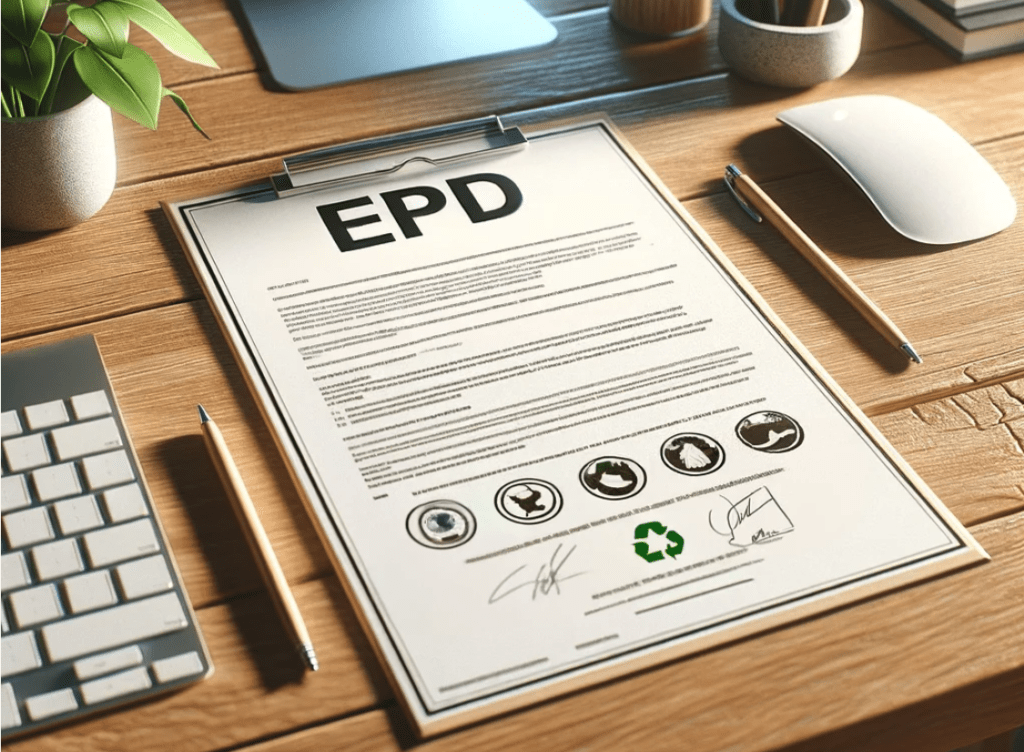
The process of creating an EPD involves several steps:
-
Select an EPD Program Operator (EPD PO): Choose an EPD PO that aligns with your needs, considering factors like cost, geographical relevance, and mutual recognition agreements with other EPD POs. Some EPD POs cater to specific regions or industries, so selecting the right one is crucial.
-
Identify a Product Category Rule (PCR): Select a PCR that matches your product characteristics and aligns with the chosen EPD PO’s requirements. PCRs ensure consistency and comparability between EPDs within a product category.
-
Gather LCA Data**:** Conduct a comprehensive LCA according to the selected PCR and ISO standards. Tools like CarbonBright can streamline calculations, especially when dealing with complex products or large datasets.
-
Engage a Third-Party Verifier: Appoint a qualified verifier recognized by the EPD PO and familiar with the chosen PCR. Early engagement with the verifier helps ensure a smooth process.
-
Draft the EPD Document**:** Develop the EPD following the EPD PO’s format. Some EPD POs allow some flexibility in design, but core information mandated by ISO 14025 must be included. Tools like CarbonBright can offer semi-automatic EPD templates to simplify this step.
-
Review by Third-Party Verifier**:** Submit the LCA report and draft EPD for review by an independent LCA expert. They will assess compliance with the EPD PO’s guidelines, PCR, and verification protocols.
-
Implement Feedback: Address any shortcomings identified during the review process. Revise the LCA report, LCA, and EPD based on the verifier’s feedback.
-
Submit the Verified EPD: Submit the final verified EPD to the EPD Program Operator for publication on relevant platforms. Congratulations! You’ve successfully published your EPD.
Conclusion
EPDs are a powerful tool for businesses to demonstrate their commitment to sustainability, gain a competitive edge, and meet evolving market demands. By understanding the benefits of EPDs and the steps involved in creating one, companies can take an active role in shaping a more sustainable future.
CarbonBright’s platform significantly enhances the process of generating Environmental Product Declarations (EPDs) by providing an automated solution for calculating product-level impact metrics at scale. Leveraging a vast proprietary database and an AI-driven environmental modeling engine, CarbonBright delivers immediate and accurate environmental impact assessments, even with fragmented or incomplete data. This capability is critical for adhering to the rigorous standards of EPDs, which require detailed lifecycle assessments. By enabling real-time transparency and identifying emissions ‘hotspots,’ CarbonBright not only streamlines the creation of EPDs but also helps companies in the CPG industry to effectively reduce their environmental footprint, meet regulatory demands, and attract eco-conscious consumers.
In an era where sustainability is increasingly prioritized, CarbonBright’s tool offers a cost-effective and efficient solution that empowers businesses to quickly generate reliable EPDs. This accelerates their ability to demonstrate sustainability commitments, gain a competitive edge, and make informed decisions that enhance product sustainability. CarbonBright thus positions companies as leaders in environmental stewardship, making it an indispensable asset in navigating the complexities of sustainable product certifications and market expectations.