Understanding the environmental impact of a product can sometimes be a little like conducting detailed forensic analysis. This is because the methodology employed for this purpose, known as a Life Cycle Assessment (LCA), is dependent on precise and comprehensive data in order to achieve robust & accurate results.
LCA is the systematic approach to evaluating the environmental aspects of a product throughout its lifecycle, from raw material extraction to disposal. Don’t worry though; we’re going to break it down into bite-sized pieces to make it easily digestible.
Phase 1 – Planning and Scoping
1. Leadership and Responsibility
A successful LCA initiative is often led by a Sustainability Manager or a data specialist within the organization. In the absence of a dedicated sustainability role, the responsibility may fall on a product manager, analyst, or regulatory/compliance professional.
2. Defining the Assessment Target
Determining whether to assess a single product or a product line sets the foundation for the data requirements. This decision impacts the scope and detail of the data collected.
3. Establishing the Scope of the LCA
The scope of the LCA defines the boundaries of the assessment:
- Cradle-to-Gate: Focuses on the environmental impact from raw material extraction to the factory gate.
- Cradle-to-Grave: Encompasses the entire lifecycle, from raw material extraction to disposal.
- Cradle-to-Cradle: Similar to Cradle-to-Grave, but includes recycling processes to make the product reusable.
Choosing the appropriate scope depends on the objectives of the study. Cradle-to-Grave assessments provide comprehensive insights for consumer transparency, while Cradle-to-Gate is useful for value chain analysis. Ultimately, both approaches contribute to sustainable production and can be used in conjunction to tackle different aspects of a product’s life cycle.
4. Create a Plan
A detailed plan, analogous to a treasure map, is crucial. It should outline the budget, scope, and timeframe for the assessment, along with stakeholders involved.
Phase 2 – Data Collection
1. Mapping Data Requirements
Data collection is pivotal for an accurate LCA. Key areas for data collection include:
- Supplier Data: Energy usage, emissions, and waste data obtained from suppliers.
- Material Data: Information on raw materials and transport distances.
- Process Data: Details on product distribution, energy usage, and emissions.
- Production Data: Bill of materials (BOM), unit weight, and production quantities.
Establishing clear communication channels with suppliers is essential for obtaining accurate and comprehensive data. This may involve sending out standardized data collection templates or questionnaires outlining the types of data needed, such as energy usage, emissions, and material inputs. Additionally, companies should emphasize the importance of accurate and comprehensive data to ensure the reliability of the LCA results.
2. The Data
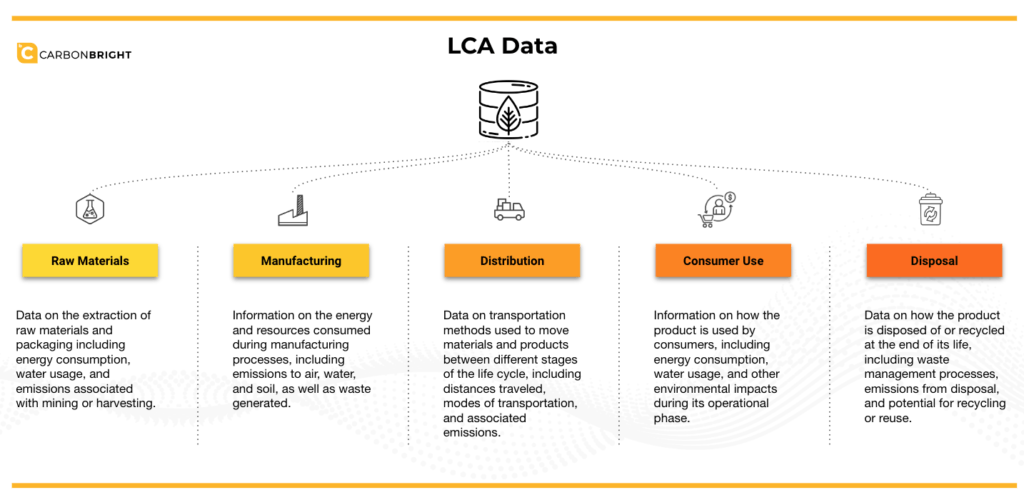
To conduct an LCA effectively, you typically get data from across the life cycle of the product’s production supply chain . Here are the key areas you’ll be focusing on:
- Raw material extraction**:** Data on the extraction of raw materials including energy consumption, water usage, and emissions associated with mining or harvesting.
- Manufacturing**:** Information on the energy and resources consumed during manufacturing processes, including emissions to air, water, and soil, as well as waste generated.
- Transportation**:** Data on transportation methods used to move materials and products between different stages of the life cycle, including distances traveled, modes of transportation, and associated emissions.
- Product use**:** Information on how the product is used by consumers, including energy consumption, water usage, and other environmental impacts during its operational phase.
- End-of-life**:** Data on how the product is disposed of or recycled at the end of its life, including waste management processes, emissions from disposal, and potential for recycling or reuse.
- Packaging**:** Data on the materials and processes used for packaging the product, including energy consumption, waste generation, and recyclability.
- Energy sources**:** Information on the sources of energy used throughout the life cycle, including fossil fuels, renewable energy, and nuclear power.
- Emissions**:** Data on emissions of greenhouse gases, air pollutants, and water pollutants associated with each stage of the life cycle.
- Water usage**:** Information on water consumption and wastewater generation throughout the life cycle.
- Land use**:** Data on the amount of land required for activities such as resource extraction, manufacturing, and waste disposal.
Once the data is collected, it’s crucial to store and manage it effectively to facilitate the LCA calculation process. Utilizing a centralized data management system or software can streamline data storage, organization, and retrieval. Proper documentation and version control practices should be implemented to track changes and updates to the data over time. Regular data validation and quality assurance checks should also be conducted to maintain data accuracy and integrity.
3. Consumer Use and End-of-Life
Often overlooked but important, consider the product’s journey, involving scenarios of consumer use and what happens at the end of its life. Industry standards or product usage requirements can guide your scenarios. Surveys may help in understanding how your customers typically use your product, and what other factors to consider (ex. Water and energy usage.)
4. Aim for Primary Data
Primary data is raw information collected directly from the main sources, like suppliers and distributors. It provides accurate and specific data for your footprint study, making your LCA more credible. When possible, aim to obtain primary data, as it will result in more accurate results. However in the absence of primary data, secondary data serves as a good alternative. Secondary data can come from a variety of sources including industry databases, scientific literature, government repositories like the EPA or EEA, academic studies, and existing LCA datasets. It’s important to ensure that the data used is accurate, up-to-date, and relevant to the specific product or process being assessed.
Phase 3: Structuring Your Data Collection
1. Identifying Data Holders
Identify which stakeholders hold the data you need. Keep them informed and make them responsible for delivering their part of the data. To incentivize stakeholders to supply the required data for your LCA, it’s crucial to emphasize the mutual benefits of accurate and comprehensive data collection. Firstly, highlighting how their contribution supports the organization’s sustainability goals and environmental stewardship can foster a sense of shared purpose. Additionally, offering recognition or acknowledgment for their participation, such as including their efforts in sustainability reports or initiatives, can serve as a form of incentive.
2. Integrating Data Specialists
Involve data specialists to establish and maintain a robust data management system. This ensures that data is securely stored, organized, and easily accessible for analysis. Implementing regular data validation and quality assurance checks is essential to maintain data integrity.
Summing It Up
Conducting an LCA requires meticulous planning, comprehensive data collection, and effective data management. By following structured phases, organizations can gain valuable insights into their products’ environmental performance and make informed decisions to minimize their ecological footprint.
CarbonBright’s state-of-the-art technology automates data collection from across your supply chain, pulling information from various sources to create a digital twin of your product’s lifecycle. This eliminates the need for manual data entry and reduces the risk of errors. Leveraging the power of generative AI, we can fill in any missing data points, ensuring a comprehensive analysis. The result? A rapid, cost-effective LCA that delivers valuable insights you can use to make data-driven decisions for a more sustainable future.