Extended Producer Responsibility (EPR) is a key policy approach to managing waste and promoting sustainable practices. EPR is an important aspect of supporting a circular economy and businesses must embrace environmentally friendly processes to comply. EPR can be beneficial not only to the environment, but also to producers of products who can reduce their reliance on finite resources.
What is Extended Producer Responsibility (EPR)?
Extended Producer Responsibility is a policy framework that places the responsibility for the lifecycle of a product—including its post-consumer phase—on the producer. These policies exist around the world and are heavily dependent on location, such as regional, national, state, and/or local legislation. This approach incentivizes producers to design eco-friendly products, reduce waste, and fund the recycling or disposal of their products.
How Can LCAs Help EPR Compliance?
Understanding EPR compliance can seem complex, but tools like Life Cycle Assessments (LCAs), also known as Life Cycle Analysis, provide actionable insights for businesses to adapt effectively. An LCA analyzes a product’s life cycle impact at every stage. Using an LCA allows businesses to better understand their product’s environmental impact and identify hotspots for improvement. This may include sourcing more environmentally friendly materials, streamlining production processes, or creating more efficient transportation routes.
Producers will have to make changes depending on the EPR policy. For example, a policy that focuses on recycling will have different requirements than a policy focused on textiles. However, LCAs can help identify necessary changes to comply with policies. Understanding how different processes or materials affect the environmental impact of a product allows producers to make informed and data backed decisions.
The Benefits of EPR
**Environmental Protection
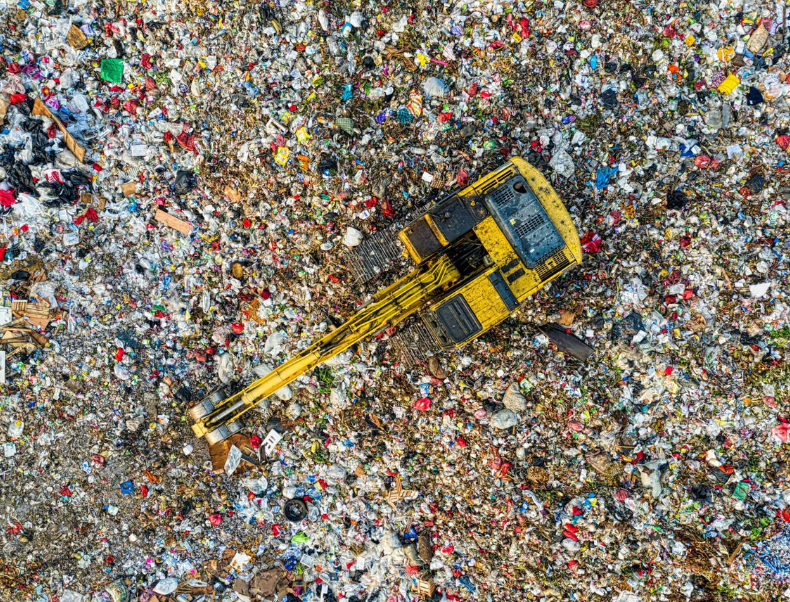
**EPR reduces landfill waste and pollution by promoting sustainable product designs and efficient recycling systems. This approach directly supports global efforts to mitigate climate change and conserve natural resources.
Economic Opportunities
By fostering innovation in recycling and product design, EPR opens new economic avenues for businesses. Companies can capitalize on growing consumer demand for sustainable products and services.
Improved Brand Image
Businesses that embrace EPR show their commitment to environmental stewardship, enhancing their reputation and building trust with eco-conscious consumers.
Key Components of EPR
Product Design
EPR encourages businesses to design products prioritizing sustainability. This includes using recyclable materials, reducing packaging, and minimizing the use of hazardous substances. Using materials that reduce dependency on finite resources and virgin materials reduces the associated impact of raw material extraction.
Take-Back Programs
Producers establish systems to collect and recycle products once they reach the end of their lifecycle. These programs are critical for ensuring proper disposal and recycling. Recycling programs are location dependent so providing a way for consumers who don’t live in an area with access to the proper infrastructure helps reduce waste.
Fees and Incentives
Governments often implement fees or taxes on products that are harder to recycle. Conversely, businesses may receive incentives for adopting sustainable practices. This motivates companies to integrate sustainable practices into their products and services. Taking advantage of these incentives while they are available may remove financial barriers and reduce unnecessary fines.
EPR Regulations Around the World
EPR policies are location and industry dependent. It is important to understand the logistics of these policies within your company’s market as policies may impact your business in different ways.
European Union
The European Union has established several key EPR regulations to align with its ambitious climate goals and reduce the environmental impact of products. These include:
The EU Packaging and Packaging Waste Directive: Focused on minimizing packaging waste and promoting recyclability.
The EU Waste from Electrical and Electronic Equipment (WEEE) Directive: Aimed at reducing e-waste through improved collection and recycling systems.
The EU Battery Directive: Targeted at the sustainable production, collection, and disposal of batteries.
These directives are integral to the EU’s efforts to advance a circular economy and foster sustainable practices across industries.
United States
EPR initiatives are rapidly expanding across the United States, with states such as California, New York, Vermont, Washington, Maine, and others leading the way by enacting progressive legislation. California stands out with 12 state-level laws—and additional local regulations—addressing various waste streams, including Textile Recovery and Pharmaceutical and Sharps Waste Stewardship. These efforts reflect a growing commitment to reducing environmental impact and advancing sustainable waste management practices nationwide.
Key Takeaways
Adopting EPR practices offers businesses a pathway to sustainability, reduced environmental impact, and enhanced market competitiveness. Businesses can actively contribute to global efforts to mitigate waste and climate change while capitalizing on new economic opportunities. Life Cycle Assessments (LCAs) play a critical role in this process, helping organizations identify environmental hotspots, improve product designs, and align with compliance requirements effectively.
While EPR compliance can be challenging due to varied regulations, upfront costs, and the need for consumer participation, these hurdles can be addressed through collaboration, education, and innovative tools. By working with government bodies, industry peers, and sustainability experts, companies can streamline compliance and build more resilient supply chains.
Ultimately, EPR is a chance for businesses to reduce their reliance on finite resources, improve their brand image, and unlock new opportunities in a rapidly evolving market. With the right strategies and support, such as Carbonbright’s AI-powered LCA solutions, organizations can turn EPR challenges into tangible benefits—empowering them to lead in the transition to a circular economy.
Next Steps: Measuring Impact
Don’t let EPR compliance overwhelm you! CarbonBright’s AI-powered LCA software helps organizations accurately measure emissions and meet regulatory standards—at a fraction of the time and cost of traditional methods. Contact us to get started!